



DevOps is a set of practices, tools, and a cultural philosophy that automate and integrate the processes between software development and other teams. It was introduced to address the large amount of wasted time and money due to communication gaps between the development, operations, and quality assurance teams. As a result, it’s becoming crucial for businesses to adopt DevOps practices, not only for hassle free software development and operations but also for the high quality of deployment for successful product delivery.
What is DevOps lifecycle & how does it work?
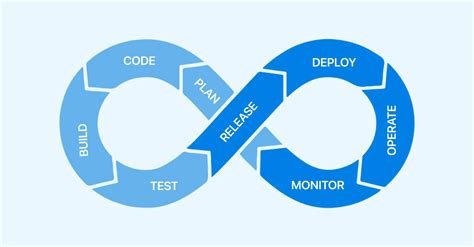
The role of DEVOPS lifecycle is to automate development processes or workflows within a tedious development process. It is called a life cycle and represented with an infinity symbol
Because it is a continuous process that never stops.
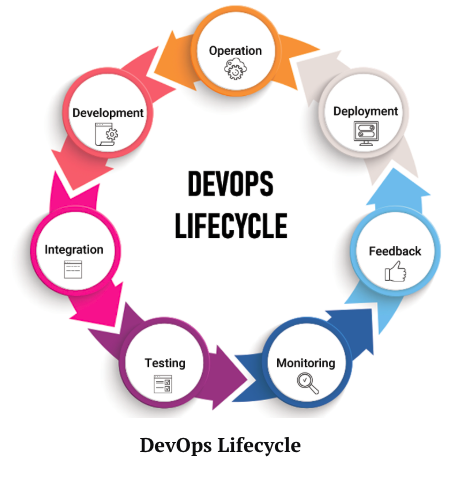
This loop depicts the collaborative approach throughout the application lifecycle, consisting of tools and technology stacks for each stage. The left part deals with software development and testing. And in contrast, the right side of the infinity loop represents the deployment and operations cycle.
Let’s briefly overview how the DevOps lifecycle works at every stage.
- Plan: In this stage, teams identify the requirement and collect end-user feedback. They create a project roadmap to maximize the business value and deliver the desired product in the lowest amount of time and effort possible during this stage.
- Code: The code development takes place at this stage. The development teams use some tools and plugins like Git , Code Rabbit etc to streamline the development process, which helps them avoid security flaws and lousy coding practices while saving both time and effort.
- Build: In this stage, once developers finish their task, they commit the code to the shared code repository using build tools like Maven and Gradle.
- Test: Once the build is ready, it is deployed to the test environment first to perform several types of testing like user acceptance test, security test, integration testing, performance testing, etc., using tools like JUnit, Selenium, etc., to ensure software quality.
- Release: The build is ready to deploy on the production environment at this phase. Once the build passes all tests, the operations team schedules the releases or deploys multiple releases to production, depending on the organizational needs.
- Deploy: In this stage, Infrastructure-as-Code helps build the production environment and then releases the build with the help of different tools.
- Operate: The release is live now to use by customers. The operations team at this stage takes care of server configuring and provisioning using tools like Chef.
- Monitor: In this stage, the DevOps pipeline is monitored based on data collected from customer behavior, application performance, etc. Monitoring the entire environment helps teams find the bottlenecks impacting the development and operations teams’ productivity.
Some of the used tools are listed bellow :
DevOps Tools Across Phases
| DevOps Phase | Tools |
| Continuous Planning & Development | GitLab, Git, TFS, SVN, Mercurial, Jira, BitBucket, Trello, Maven, Gradle, Confluence, Subversion, Scrum, Lean, Kanban |
| Continuous Integration | Jenkins, Bamboo, GitLab CI, TeamCity, Travis CI, CircleCI, Buddy |
| Continuous Testing | JUnit, Selenium, JMeter, Cucumber, TestSigma, Microfocus UFT, TestNG, Tricentis Tosca, Jasmine |
| Continuous Deployment | Ansible, Chef, Docker, IBM Urban Code, Kubernetes, Puppet, Go, Vagrant, Spinnaker, ArgoCD |
| Continuous Monitoring | Nagios, Grafana, Kibana, Prometheus, Logstash, AppDynamics, ELK Stack, New Relic, Splunk, Sensu, PagerDuty |
| Customer Feedback | Webalizer, W3Perl, ServiceNow, Slack, Flowdock, Open Web Analytics, Pendo, Qentelli’s TED |
| Continuous Operations | Kubernetes, Docker Swarm |
Conclusion :DevOps has improved the software development industry by promoting a culture that delivers high-quality software at greater speed. The primary goal of the DevOps lifecycle is to ensure continuous integration and delivery while maximizing automation. It emphasizes effective collaboration among developers, testers, and operations teams to accelerate software production and enhance the overall user experience.
